There’s something oddly fascinating about the spaces where sports happen. Think about it for a moment — the chalked lines on a football field, the quiet symmetry of a tennis court, or the smooth rectangle where basketball unfolds. We watch the game all the time, yet most of us rarely stop to think about the size of the court itself.
And honestly, it only becomes a real question when someone tries to build one.
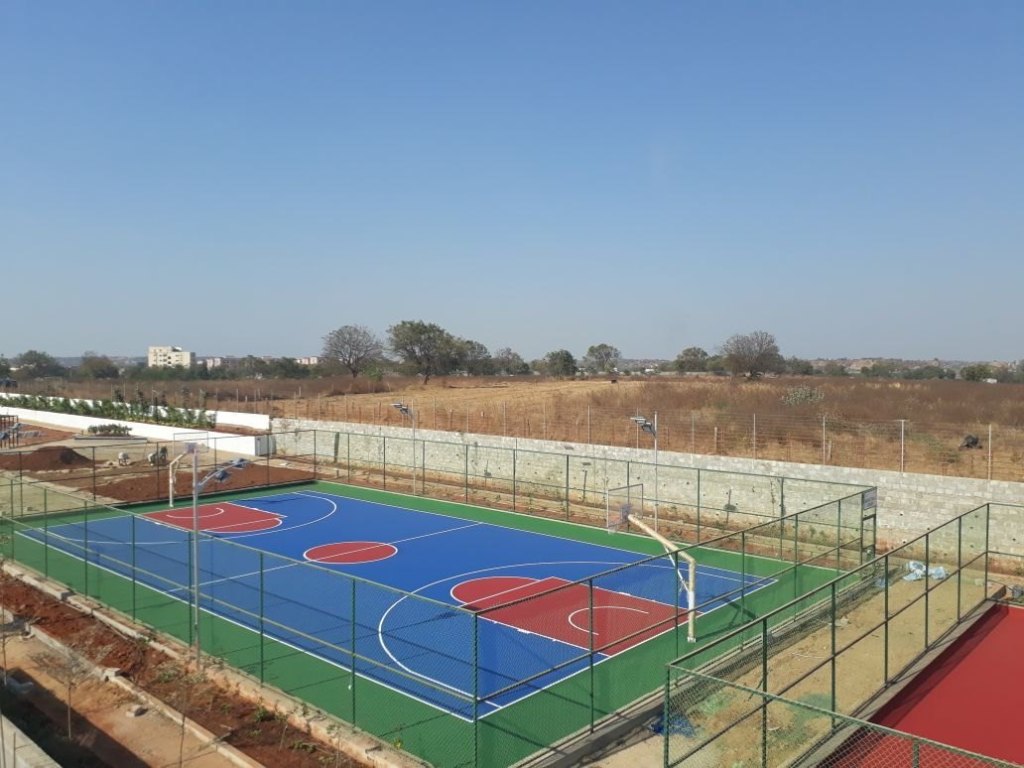
Maybe it’s a homeowner sketching a backyard half-court. Maybe a school is planning a new gym. Or maybe someone is just curious after watching a game and wondering how much space those athletes are actually covering.
Either way, understanding the dimensions of a basketball court is more interesting than it sounds. It’s not just numbers and measurements. It’s about how the game flows, how players move, and how the space shapes everything from strategy to speed.
Let’s dig into it.
The Standard Court You See on TV
Most professional and college games follow the same general layout. If you’ve watched basketball long enough, the court probably feels familiar — two hoops at opposite ends, a center circle, a three-point arc, the key, and those crisp boundary lines that define the battlefield.
But behind that visual simplicity sits a very precise measurement system.
A regulation court used in professional leagues and the NCAA measures 94 feet long and 50 feet wide. That’s the standard you’ll see in most indoor arenas and televised games. It creates enough room for fast breaks, defensive rotations, and all the chaos that makes basketball exciting.
Of course, that size didn’t appear randomly. Over time, leagues experimented with spacing until they found dimensions that allowed players to move freely without the court feeling either cramped or unnecessarily large.
And once those measurements proved to work well, they became the blueprint for the modern game.
Why Court Dimensions Matter More Than You’d Think
At first glance, the numbers might seem arbitrary. Ninety-four feet here, fifty feet there. But court dimensions actually shape how the game is played.
A longer court gives players space for fast transitions and full-court presses. It creates room for passing lanes and open shots. Without that distance, the game would feel crowded and defensive play would dominate.
Width matters too. That extra space along the wings allows shooters to stretch the floor. Coaches talk about “spacing” constantly — keeping defenders spread out so the offense can move freely.
It’s a delicate balance, really. Too small and the game becomes chaotic. Too large and players would spend half their energy just running up and down the floor.
So when people search for the basketball court size in feet, they’re usually discovering something bigger than just a measurement. They’re learning how the physical space shapes the rhythm of the sport itself.
Different Levels, Different Court Sizes
Not every basketball court is built the same. While professional arenas follow strict guidelines, youth leagues and recreational courts often adjust the dimensions.
High school courts, for example, are typically slightly shorter. Many measure around 84 feet long instead of the professional 94. That difference might not seem huge, but it noticeably changes the pace of the game.
Youth courts are sometimes even smaller, designed so younger players don’t have to cover excessive ground.
Then there are half-courts, which are probably the most common courts built in homes, parks, and neighborhoods. They cut the playing space in half while keeping the same hoop and three-point layout on one side.
For casual games, that setup works perfectly. It’s easier to build, easier to maintain, and still captures the essence of basketball.
And if you’ve ever played pickup games in a park, you know that half-courts often produce the most intense matches.
Breaking Down the Key Measurements
Beyond the overall size, several important markings define how basketball works.
The free-throw line sits 15 feet away from the backboard. The three-point line varies depending on the league but generally stretches around 22 to 23 feet from the hoop in professional play.
The key — that rectangular painted area near the basket — measures 16 feet wide in the NBA. This is where much of the action happens: rebounds, post moves, and defensive battles under the rim.
But perhaps the most straightforward measurement is the length of basketball court, which, in professional settings, remains consistently set at 94 feet. That distance is just enough to allow dramatic fast breaks while still keeping the game compact and energetic.
When you watch a guard sprint down the floor for a layup, those 94 feet disappear faster than you’d expect.
Backyard Courts and Practical Space
Of course, not everyone building a court has access to a massive indoor arena.
Backyard courts often adapt to the available space. Some people build half-courts measuring around 50 by 47 feet. Others shrink things further, creating compact shooting courts that focus mainly on practice rather than full games.
Driveway courts are especially common. A hoop mounted above the garage and a few painted lines can transform a simple driveway into a personal practice facility.
Sure, it may not match official dimensions exactly — but the spirit of the game remains the same.
In fact, many professional players grew up practicing on improvised courts. Uneven asphalt, faded lines, and creative boundary rules were all part of the experience.
Sometimes limitations actually make the game more fun.
Indoor vs Outdoor Space Planning
Another factor people don’t think about right away is the extra space surrounding the court.
Official arenas include several additional feet around the sidelines and baselines to keep players safe when they dive for loose balls or chase rebounds.
Outdoor courts should also allow a buffer zone. Even if the playing surface follows regulation dimensions, surrounding space prevents collisions with fences, walls, or benches.
It’s one of those small planning details that ends up making a big difference.
And when designing a court from scratch, thinking about that breathing room can save a lot of headaches later.
The Court as a Place, Not Just a Measurement
At the end of the day, a basketball court is more than a rectangle with lines.

