Introduction to Mouth Cancer
Mouth cancer, also known as oral cancer, develops when abnormal cells grow uncontrollably in tissues inside the mouth. It can affect the tongue, lips, gums, inner cheeks, floor of the mouth, and roof of the mouth. Early recognition of unusual changes is important because timely medical evaluation can help identify the condition and guide appropriate treatment.
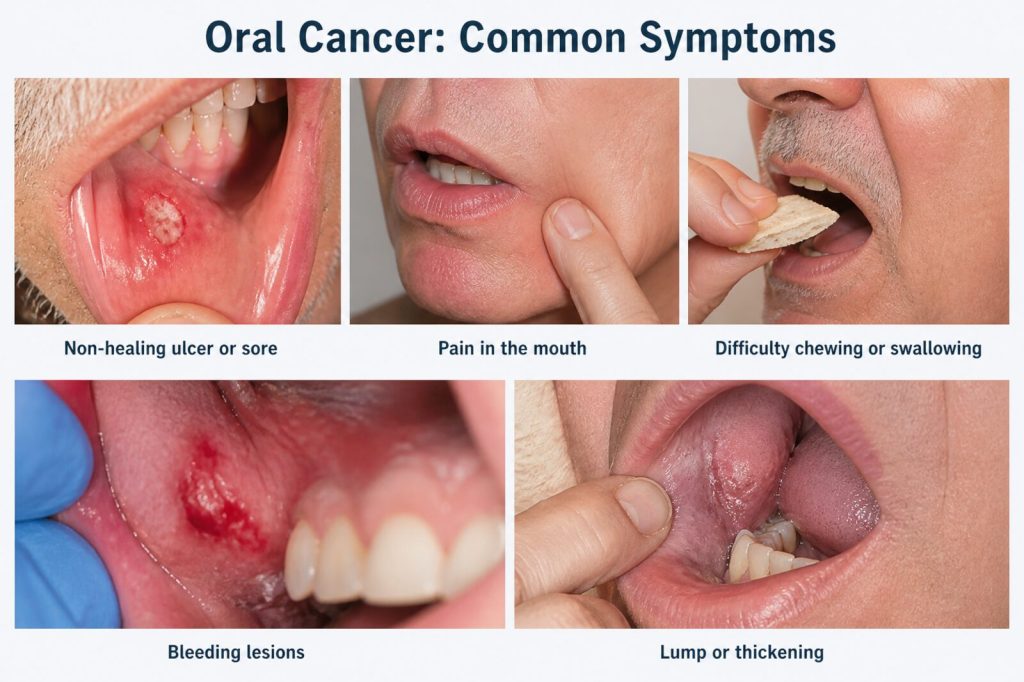
Tobacco use, including chewing tobacco, smoking, and other smokeless tobacco products, is a significant risk factor. Heavy alcohol consumption and certain human papillomavirus infections can also contribute to cancer risk, depending on the affected area. Regular dental examinations and awareness of oral health changes can support early detection.
Recognising the Early Warning Signs
Understanding the early signs of mouth cancer can help individuals recognise when professional assessment may be necessary. One common warning sign is a mouth ulcer or sore that does not heal within two weeks. Although most mouth ulcers are harmless, persistent sores should be examined by a dentist or doctor.
Other possible symptoms include red or white patches inside the mouth, unexplained bleeding, a lump or thickened area, persistent mouth pain, and numbness of the tongue or lips. Some people may experience difficulty chewing, swallowing, speaking, or moving their tongue or jaw comfortably.
A persistent sore throat, a feeling that something is stuck in the throat, or a lump in the neck may also require medical evaluation. These symptoms do not always indicate cancer, as infections and other conditions can produce similar changes. However, persistent or worsening symptoms should not be ignored.
Understanding Oral Cancer Stages
Doctors classify oral cancer according to the size of the tumour, involvement of nearby lymph nodes, and whether the disease has spread to distant parts of the body. The term oral cancer stages describes the extent of the disease and helps specialists plan appropriate treatment.
Stage 0, also called carcinoma in situ, involves abnormal cells that have not invaded deeper tissues. Stage I generally describes a small, localised tumour. Stage II usually indicates a larger tumour that remains relatively limited in its spread.
Stage III may involve a larger tumour or cancer that has reached nearby lymph nodes, depending on the specific findings. Stage IV includes more advanced disease, which may involve surrounding structures, more extensive lymph node involvement, or spread to distant organs.
The precise stage depends on clinical examination, imaging, biopsy results, and other relevant investigations. Oral cancer staging can be complex, so patients should ask their specialist to explain what their individual results mean.
How Mouth Cancer Is Diagnosed
Diagnosis usually begins with an examination of the mouth, tongue, gums, lips, and nearby lymph nodes. The doctor may ask about symptoms, tobacco or alcohol exposure, medical history, and how long the abnormality has been present.
If a suspicious area is identified, a biopsy may be performed to collect tissue for laboratory examination. Imaging tests, such as CT scans, MRI, or PET scans, may be recommended to assess the extent of the disease. Not every patient needs every test; the diagnostic plan depends on the initial findings.
An accurate diagnosis helps determine the cancer’s location, type, and stage, allowing the medical team to discuss suitable treatment options.
Available Oral Cancer Treatment Options
Treatment depends on the cancer’s stage, location, and the patient’s overall health. Surgery may be used to remove the tumour and, when necessary, affected lymph nodes. Radiation therapy uses focused radiation to destroy cancer cells and may be recommended after surgery or in selected cases as a primary treatment.
Chemotherapy may be combined with radiation therapy or used in other treatment plans. Targeted therapy and immunotherapy may be appropriate for certain patients, particularly when the disease is advanced or has specific characteristics.
Rehabilitation, nutritional support, speech therapy, and swallowing assistance may also help patients manage treatment effects and recover daily functions.
Prevention and Regular Oral Health Checks
Avoiding tobacco products, limiting alcohol consumption, maintaining oral hygiene, and attending regular dental check-ups can support oral health. People should seek professional advice when unusual mouth changes persist, even if they do not cause pain.
Conclusion
Recognising suspicious mouth changes and understanding how oral cancer is staged can help patients seek timely medical attention. Professional examination, accurate diagnosis, and personalised treatment planning are important steps in managing the condition. Early evaluation gives patients an opportunity to discuss appropriate care with qualified healthcare specialists.

